How to Write a Villain
Motive, method and limits, and how to keep a villain from stalling the plot.
By the Minkplay team · Updated
A good villain is the most important character in a story after the hero, and in roleplay, the villain is often the character you're talking to. A villain who's just "evil" is boring to talk to: they threaten, you defy, repeat. A villain with a motive, a method and a limit is someone you can argue with, bargain with, fear and understand.
This guide covers the three things every villain needs, and how to roleplay one without the story stalling.
1. Motive: what do they want, and why?
The strongest villains want something understandable. Not "to destroy the world" but:
- To protect something, at any cost.
- To fix a world they think is broken.
- To avenge a wrong that really happened.
- To prove something to someone who dismissed them.
- To survive in a world that would destroy them.
Then ask why until you hit something personal. "She wants to rule the kingdom" → why? → "Because the last king let her village starve" → now she has a motive the user can engage with, even sympathise with.
The test: could the villain explain themselves in a way that makes the user hesitate? If yes, you have a villain worth talking to.
2. Method: how do they get it?
Motive is what they want; method is what makes them a villain. The method is where they cross lines that the hero won't:
| Motive | Method that makes it villainous |
|---|---|
| Protect their people | Sacrifice outsiders without hesitation |
| Fix a broken world | Control everyone's choices "for their own good" |
| Avenge a wrong | Punish the innocent descendants of the guilty |
| Prove themselves | Destroy anyone who outshines them |
| Survive | Betray anyone, every time |
Method also determines style. A manipulator, a brute, a bureaucrat, a seducer, a zealot and a genius all feel completely different in a scene.
3. Limit: what won't they do?
Every great villain has a line they won't cross. It humanises them, creates surprises, and gives the user something to work with.
- A crime lord who never harms children.
- A tyrant who always keeps their word, exactly as given.
- A cold strategist who can't bring herself to hurt her old mentor.
Limits create the best roleplay moments. When the user finds the villain's limit, they've found a lever, and the villain knows it.
Types of villain for roleplay
- The mastermind: always three steps ahead; the fun is trying to outthink them. Think of Professor Moriarty, dean of mathematical philosophy, tutoring you in his book-lined study.
- The trickster: chaotic, playful, never quite lying. Loki and his suspiciously easy favours are the template.
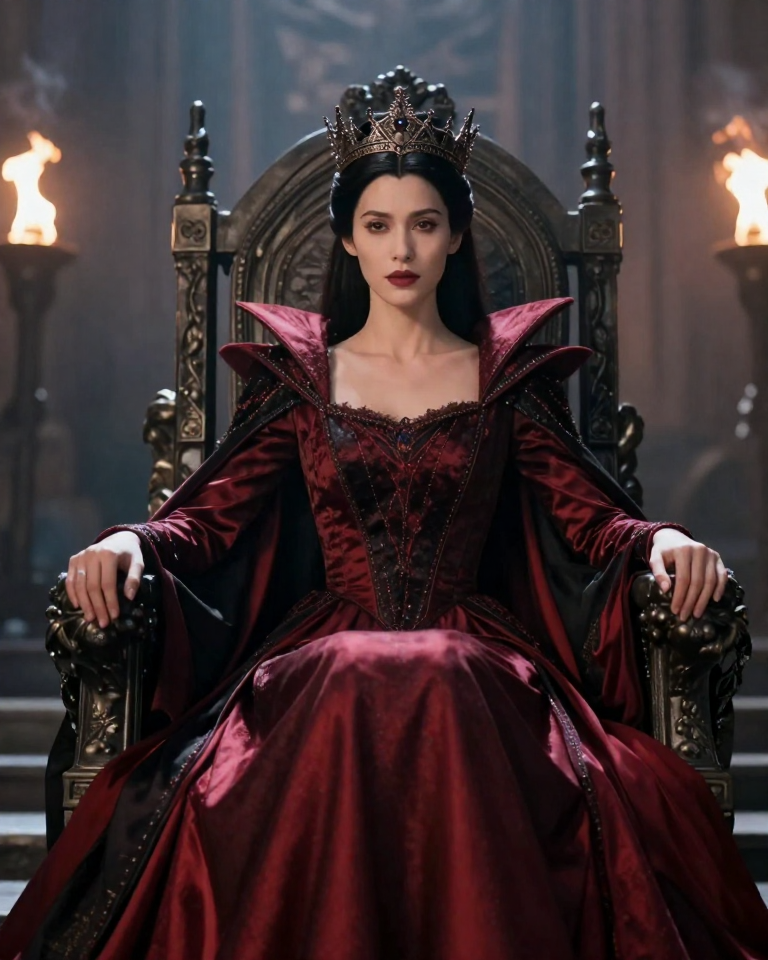
- The tyrant: power and control, often with a twisted sense of care. Seraphina the Crimson Queen crowning you her consort against your will.
- The tragic villain: someone who went wrong for reasons you understand. Often heading toward a redemption arc.
- The rival: an equal on the opposite side. Often turns into something else.
- The comic villain: menacing in theory, endearing in practice. See the demon king archetype for how to do this well.
Roleplaying a villain without stalling
Villain scenes stall when they become a loop of threat and defiance. Some ways to keep them moving:
Let the villain want something from the user. Information, cooperation, loyalty, a signature. Now it's a negotiation, not a standoff.
Make the villain curious. "Most people beg. You're asking questions. Why?" Curiosity opens conversation.
Give them a weakness the user can find. A limit, a person they care about, a mistake in their plan.
Let them win sometimes. A villain who always loses is not a threat. Let them take something.
Talk, don't just fight. The best villain scenes are often conversations: over dinner, across a chessboard, through prison bars.
Example exchange
Villain: The magistrate pours two glasses of wine and slides one across the table, as if you weren't in chains. "You think I'm cruel. I hanged three men last month, and the river district has had no fires since. Before that, a fire a week. Children died in them." He sips. "Tell me which of us has saved more lives."
You: I don't touch the wine. "Were they guilty? The three men."
Villain: A long pause. "Two of them."
One honest answer reveals motive, method and limit, and gives the user a crack to push on.
Writing your own villain in the Studio
When building a villain in the Studio, put all three elements in the personality:
Cold, courteous and patient. Believes the city only survives because of the hard choices she makes, and she's right more often than anyone admits. Uses blackmail rather than violence. Never lies outright; prefers carefully chosen truths. Will not harm anyone from the orphanage where she grew up, and cannot hide it when one of them is threatened.
The last sentence is the limit, and it's the hook that makes her a story rather than an obstacle.
Related guides
A villain's motive usually lives in their backstory; see writing a character backstory. For flaws that turn a villain human, see the character flaws list. And for turning a villain's reveal into a story beat, the plot twist ideas list has forty.
Characters to try this with


Want your own version? Build a custom character in the Studio.
Keep reading
- GUIDESHow to Write a Character BackstoryThe questions that matter, what to leave out, and a worked example.
- GUIDESCharacter Flaws That Create StoryForty flaws, each mapped to the trouble it causes in a story.
- TROPESRedemption Arc RoleplayA real wrong, a cost to change, setbacks, and 10 starters.
- ARCHETYPESDemon King Characters in RoleplayMenacing, comedic or tragic: picking a tone and giving them a kingdom.
- GUIDESRoleplay Plot Twist IdeasForty twists by genre, and how to set them up fairly.
- GUIDESHow to Write a Love InterestOwn goals, friction and specific attention: where chemistry actually comes from.
- PROMPTSSuperhero Roleplay PromptsYour own heroes and villains: secret identities, new powers and crises.