How to Write a Character Backstory
The questions that matter, what to leave out, and a worked example.
By the Minkplay team · Updated
A backstory has one job in roleplay: to create story in the present. It's not a biography. Nobody needs to know the character's primary school or favourite colour unless those things change what happens next. A good backstory is a handful of past events that still have a grip on the character now: a wound, a debt, a secret, a promise.
This guide covers the questions that matter, what to leave out, and a full worked example.
The test for every backstory detail
Before you keep a detail, ask: does this affect how the character acts in a scene?
- "She grew up in a fishing village": not yet useful.
- "She grew up in a fishing village and still can't look at the sea since the storm that took her brother": useful. It changes how she acts on a boat, near a harbour, in the rain.
If a detail doesn't pass the test, cut it, or rewrite it until it does.
Six questions that produce useful backstory
1. What happened that they can't stop thinking about? The defining event. A loss, a betrayal, a failure, a moment of shame or glory.
2. What do they want now because of it? The past should create a present goal. Revenge, redemption, safety, proof, to finish what someone else started.
3. What do they believe about the world because of it? "Trust gets you killed." "Rules protect people." "Nobody stays." Beliefs drive choices more than facts do.
4. What are they hiding? A secret gives the story somewhere to go. It doesn't have to be dramatic; even a small secret creates tension.
5. Who from their past is still out there? An old mentor, a rival, a family member, an ex. People from the past are plot waiting to happen.
6. What would make them change? This is the hook for the whole story. What would have to happen for their belief from question 3 to break?
What to leave out
- Exhaustive timelines. Birth, childhood, teens, early career… pick the one or two moments that matter.
- Resolved problems. If something from their past is completely settled, it doesn't drive story.
- Things that make them perfect. "Trained by the greatest masters, never lost a fight": that's not backstory, it's armour that prevents story.
- Everything at once. Even a great backstory shouldn't be dumped in the greeting. Let it come out in pieces.
Worked example
Let's write a backstory for a character called Corin Vale, a ship's surgeon on a merchant vessel.
1. Defining event: Three years ago, as a young army surgeon, Corin made a call in a field hospital: treat the general first, or the wounded boy. He chose the general. The boy died. The general survived and was promoted.
2. Present want: to never again choose whose life is worth more. Corin left the army and took a job where he answers to no one about who gets treated.
3. Belief: "Rank doesn't decide who's worth saving." He's openly contemptuous of anyone who pulls rank.
4. Secret: He still has the boy's letter home, never delivered. He carries it everywhere.
5. Someone still out there: The general, now an admiral, whose fleet patrols the same waters.
6. What would change him: Being forced into the same choice again, and choosing differently, or making the same choice for a better reason.
Six short answers. And look what it gives you in roleplay:
- An instantly interesting reaction to any authority figure.
- A natural crisis waiting to happen (the admiral's fleet).
- A secret object (the letter) that someone could find.
- An arc with a real climax.
Revealing backstory in roleplay
Backstory works best when it's discovered, not delivered. Some techniques:
- Reactions before explanations. Corin flinches when someone salutes. The user notices; the explanation comes later.
- Objects. The undelivered letter falls out of his coat.
- Other characters. Someone from his past recognises him.
- Pressure. In a crisis, the past surfaces: "I've done this before. I chose wrong."
The order matters: hint, then hint again, then reveal. By the time the user learns the story, they've already been wondering about it.
Backstory for your own persona
Your persona benefits from a backstory too, even a small one. If your character has a reason to be in the scene, a want, and a secret, the AI character has much more to engage with. Two or three lines is plenty.
Characters with backstories doing real work
On Minkplay, look at how history drives these characters: Lucien, the cursed heir of Blackwood Manor; Medusa, who keeps her back turned so you'll leave before you see her; and Ren, the hunter hiding that he's half the thing he hunts.
Where backstory fits in a full character
Backstory is one piece of a character sheet. The full process (concept, personality, scenario and greeting) is in how to create an AI character. For the flaw that usually sits at the centre of a good backstory, see the character flaws list, and for making the present-day personality hang together, see choosing personality traits. If your backstory belongs to an antagonist, writing a villain covers motive and method.
Characters to try this with
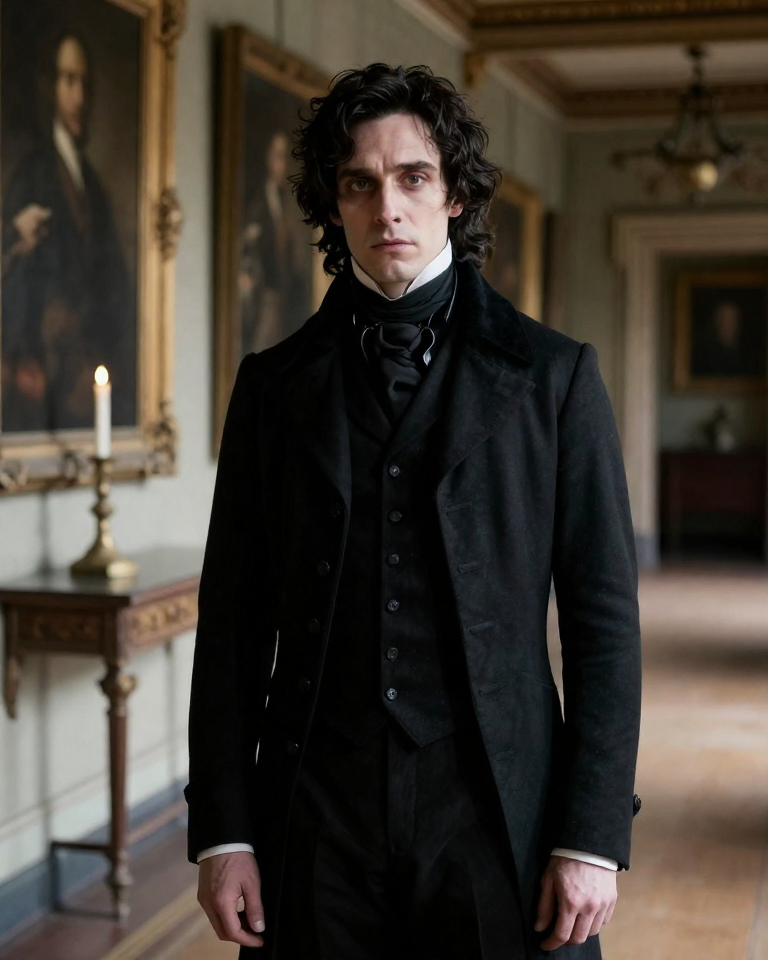


Want your own version? Build a custom character in the Studio.
Keep reading
- GUIDESHow to Create an AI CharacterConcept to greeting, with one character built from scratch as a worked example.
- GUIDESCharacter Flaws That Create StoryForty flaws, each mapped to the trouble it causes in a story.
- GUIDESChoosing Personality Traits for a CharacterTrait combinations, useful contradictions and how a character behaves under pressure.
- GUIDESHow to Write a VillainMotive, method and limits, and how to keep a villain from stalling the plot.
- GUIDESOriginal Character (OC) IdeasFifty OC concepts, each with a hook that starts a story.
- GUIDESHow to Write an AI Character GreetingA greeting formula plus ten examples across genres.
- GUIDESAI Roleplay for WritersFind voices, test scenes and break blocks, then turn it into your own draft.